 (+91) 9746 999 125
 support@greensofkerala.com
 Pan India Delivery





Related Products


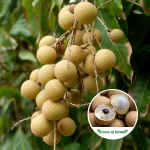
Longan: The Tree with the Dragon’s Eyes. He is not Lychee but his brother…
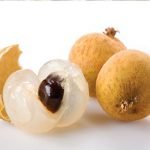
Dimocarpus longan, commonly known as the longan is a tropical tree species that produces edible fruit. It is one of the better-known tropical members of the soapberry family Sapindaceae, to which the lychee and rambutan also belong. The fruit of the longan is similar to that of the lychee, but less aromatic in taste. It is native to tropical Asia and China. The longan, is so named because it resembles an eyeball when its fruit is shelled (the black seed shows through the translucent flesh like a pupil/iris). The seed is small, round and hard, and of an enamel-like, lacquered black. The fully ripened, freshly harvested fruit has a bark-like shell, thin, and firm, making the fruit easy to peel by squeezing the pulp out as if one were “cracking” a sunflower seed. When the shell has more moisture content and is more tender, the fruit becomes less convenient to shell. The tenderness of the shell varies due to either premature harvest, variety, weather conditions, or transport/storage conditions. Longan trees prefer sandy soil. While the species prefers temperatures that do not typically fall below 4.5 °C (40 °F), it can withstand brief temperature drops to about -2 °C (28°F). Longans usually bear fruit slightly later than lychees. The fruit is sweet, juicy and succulent in superior agricultural varieties and, apart from being eaten fresh, is also often used in Asian soups, snacks, desserts, and sweet-and-sour foods, either fresh or dried, sometimes canned with syrup. The taste is different from lychees; while longan have a drier sweetness, lychees are often messily juicy with a more tropical, sour sweetness. The seed and the shell are not consumed. Dried longan are often used in Chinese cuisine and Chinese sweet dessert soups. In Chinese food therapy and herbal medicine, it is believed to have an effect on relaxation. In contrast with the fresh fruit, which is juicy and white, the flesh of dried longans is dark brown to almost black.
MAINTENANCE OF LONGAN
Grow the longan tree in full sun in the warmest, driest area of the garden. Water the young longan tree regularly to keep the soil moist. When the tree begins bearing fruit, it only requires a regular irrigation schedule while it is in flower and bearing fruit. Withhold water in September and October. Maintain a grass- and weed-free area around the trunk of the longan tree. Apply a 4-inch layer of mulch, 8 inches from the tree’s trunk and spread out to the dripline. Mulch helps discourage weed growth.
FERTILIZING
During the immature stage, a combination of organic and inorganic fertilizers may be used. Organic fertilizer such as cow manure can be applied at the rate of about 10 kg/tree/year, applied about 3-4 times in a year. The longan tree requires equal ratio N:P:K fertilizer (i.e. 6:6:6 or 15:15:15, etc.). Spread the fertilizer on the soil, 10 inches from the trunk, and spread it out 1 foot beyond the drip-line. Water well after applying. After one month of planting, fertilize with about 110 g (1/4 pound) of 5-5-5 NPK fertilizer every 2 months. Second Year, fertilize with about 220 g (1/2 pound) every 3 months. Third year, fertilize with about 450 g (1 pound) every 3 months. Mature Longan Trees: Mature longan trees require 1.5 to 2.25 kg (3.3 – 5 pound) of fertilizer just before the tree blooms in late spring and again before or during the harvest. If the soil is acid to neutral, apply iron sulfate at 5 to 30 g per tree to the soil 3 to 4 times a year.
PEST AND DISEASE CONTROL
The most common pests on the longan tree are the lychee webworm and several scale insects. The lychee webworm attacks emerging shoots and panicles, flowers and young fruit and if left uncontrolled drastically reduce fruit set and crop yields. Scales insects like banana shaped (Coccus acutissimus) and barnacle (Ceroplastes spp.) are other common pests that attack the longan tree, mostly the underside of leaves and the philephedra scale (Phillephedra tuberculosa) attacks leaves and fruit. Bats or flying foxes can eat up longan fruits during fruiting seasons. A protective net around the perimeter of the tree can be erected.
PRUNING
Cutting 1 to 2 inches from the tips of new shoots on the young longan tree during the spring and summer will help keep the tree compact. Only limited numbers of main branches (3-4 main branches) are retained to contain height and obtain the desired tree structure. This will facilitate light penetration in the the canopy on maturity. You can prune the longan tree after harvest to control its height and spread. Trees more than about 10 to 15 ft high (3 – 4.5 m) and 15 to 30 ft (4.5 – 9 m) wide are difficult to care. A mature tree can be pruned during and immediately after fruit harvest to control its size, making a lower tree canopy. If the tree becomes too dense, removal of some branches will increase air circulation.
HARVESTING YOUR LONGAN
The fruits can be protected from birds by netting or bagging the fruit in paper bags. The longan fruit do not continue to ripen after they are removed from tree unlike bananas, guavas and mangoes. So you should be sure that the fruits have ripen before you pick them. Wait for the fruits to change their color to light brown and size 2 cm or greater with good flavor. You may pick one fruit and taste for its sweetness before you harvest them. During the harvest, too much removal of leaves and wood with the fruit panicles can reduce flowering the next season. You can refrigerate the fruits in plastic bags for later use.
Plants Delivery via Courier [Doorstep]
In Rare instances, customers may need to collect plants from the nearest collection point.
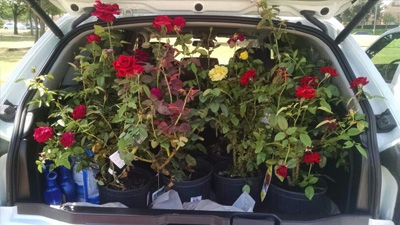
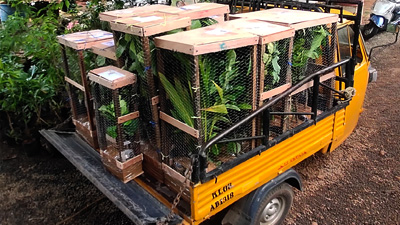
Plants Delivery via Truck [Bulk Order]
Regrettably, this service is limited to Kerala, Tamil Nadu, Karnataka and Hyderabad only.

Plants Delivery via Train [Customer Pickup]
Customers will be required to collect plant package directly from the designated railway station.
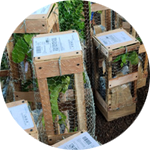
Wooden Box Packing
To safeguard plants during transit, we utilize sturdy wooden boxes for packaging. (except coconut saplings).
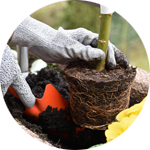
Ship with 100% Soil
We ship saplings with their soil intact, ensuring that 100% of the soil is included during the shipping process.
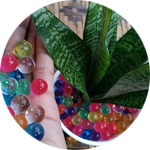
Water Balls & Cocopeat
We add water balls and cocopeat into every container to make sure the plant is fresh and moist.


Reviews
There are no reviews yet.