 (+91) 9746 999 125
 support@greensofkerala.com
 Pan India Delivery

Most Common Diseases Affecting Dragon Fruit Plants And Their Solutions

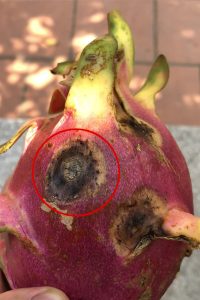
1. Anthracnose
Symptoms:
Anthracnose manifests as dark, sunken lesions on the stems, flowers, and fruit of the Dragon Fruit plant. These lesions may have a pink or orange spore mass, indicating the presence of the fungal pathogen.
Solutions:
- Removal and Destruction: Promptly remove and destroy infected plant parts to prevent the spread of the disease.
- Fungicide Application: Apply fungicides containing copper or chlorothalonil to protect healthy plant tissues.
- Good Air Circulation: Ensure good air circulation around the plants by providing adequate spacing and pruning.
- Watering Practices: Avoid overhead watering to reduce the humidity that favors fungal growth.
1. Anthracnose
Symptoms:
Anthracnose manifests as dark, sunken lesions on the stems, flowers, and fruit of the Dragon Fruit plant. These lesions may have a pink or orange spore mass, indicating the presence of the fungal pathogen.
Solutions:
- Removal and Destruction: Promptly remove and destroy infected plant parts to prevent the spread of the disease.
- Fungicide Application: Apply fungicides containing copper or chlorothalonil to protect healthy plant tissues.
- Good Air Circulation: Ensure good air circulation around the plants by providing adequate spacing and pruning.
- Watering Practices: Avoid overhead watering to reduce the humidity that favors fungal growth.
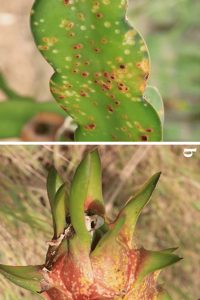
2. Stem Canker
Symptoms:
Stem canker appears as brown or black cankers on the stems, which can girdle the stem and cause dieback. Infected cankers may ooze a reddish-brown sap, indicating severe infection.
Solutions:
- Pruning: Prune and discard infected stems to prevent the spread of the disease.
- Fungicide Application: Apply fungicides to protect the remaining healthy parts of the plant.
- Improved Drainage: Improve soil drainage around the plant to prevent waterlogging, which can exacerbate the disease.
- Avoid Wounding: Be careful to avoid wounding the stems during maintenance, as this can facilitate infection.
2. Stem Canker
Symptoms:
Stem canker appears as brown or black cankers on the stems, which can girdle the stem and cause dieback. Infected cankers may ooze a reddish-brown sap, indicating severe infection.
Solutions:
- Pruning: Prune and discard infected stems to prevent the spread of the disease.
- Fungicide Application: Apply fungicides to protect the remaining healthy parts of the plant.
- Improved Drainage: Improve soil drainage around the plant to prevent waterlogging, which can exacerbate the disease.
- Avoid Wounding: Be careful to avoid wounding the stems during maintenance, as this can facilitate infection.
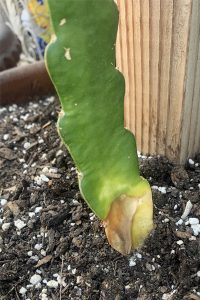
3. Root Rot
Symptoms:
Root rot is characterized by wilting and yellowing of the plant, along with black, mushy roots. This disease leads to poor growth and eventual plant decline.
Solutions:
- Soil Management: Ensure the soil is well-draining to prevent waterlogging, which can cause root rot.
- Plant Removal: Remove affected plants immediately to prevent the disease from spreading to healthy plants.
- Soil Treatment: Treat the soil with fungicides if necessary to eradicate the pathogen.
- Sterilized Soil and Pots: Use sterilized soil and pots for planting to prevent introducing the pathogen to new plants.
Buy Dragon Fruit Plant Online

3. Root Rot
Symptoms:
Root rot is characterized by wilting and yellowing of the plant, along with black, mushy roots. This disease leads to poor growth and eventual plant decline.
Solutions:
- Soil Management: Ensure the soil is well-draining to prevent waterlogging, which can cause root rot.
- Plant Removal: Remove affected plants immediately to prevent the disease from spreading to healthy plants.
- Soil Treatment: Treat the soil with fungicides if necessary to eradicate the pathogen.
- Sterilized Soil and Pots: Use sterilized soil and pots for planting to prevent introducing the pathogen to new plants.
Those information are knowledgeable to me, but I need more
Name of Spray details