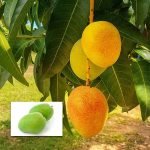
India is well known for the exotic fruit, mango which is known as the king of all fruits. Yet there is a mango cultivar known as Alphonso, which is considered to be the king of all mangoes. The country has more than a hundred varieties of mangoes and the climate of India is beneficial for the fruit as well as its trees’ growth. Mango, the national fruit of India is native to South Asia and many varieties are found in nature as wild mangoes. 

History of Alphonso mango and states they cultivate the fruit

The name of the mango variety comes from a Portuguese viceroy named Alphonso de Albuquerque of the 15th century. He was a famous military person who helped Portugal to establish its colonies in Goa during the time. During the time Goa varieties such as ‘sucking type’ was prominent, but he wanted to introduce mango variety that is firm in texture so that they can be cut and served. They began to graft until they succeed in getting the cultivar called Alphonso. The variety has been cultivated in all most all parts of India, but the most famous, tasty and expensive variety is from Ratnagiri, Maharashtra. 

Taste of Alphonso mango

Alphonso mango is sometimes hailed as the king of mangoes because of its highly sweet, creamy and pulpy texture and it is non-fibrous, unlike many indian varieties.

Buy Alphonso Mango Plant Online

Health Benefits of Alphonso Mango

plants drum
Terrace farming

Can Alphonso mango grow in a pot?

Yes, Grafted Alphonso mango saplings can be grown in a pot as a bonsai tree. Because of the pot, the plant will not grow as it is on the ground. Pruning has to be done even if it is in the pot. The container mango tree will grow up to 4 to 8 feet. The container should have drainage holes. Before filling the pot with fertilizers and soil, add broken pottery to make the drainage more effective. 

plants drum
Terrace farming

Can Alphonso mango grow in a pot?

Yes, Grafted Alphonso mango saplings can be grown in a pot as a bonsai tree. Because of the pot, the plant will not grow as it is on the ground. Pruning has to be done even if it is in the pot. The container mango tree will grow up to 4 to 8 feet. The container should have drainage holes. Before filling the pot with fertilizers and soil, add broken pottery to make the drainage more effective. 
Alphonso Mango Sapling Planting Instruction

Suitable location

  • Finding the right place for planting the tree is the first step. Alphonso mango plant requires abundant sunlight, so make sure not to plant the tree under any other trees or shades.
  • The issue of waterlogging has to be avoided.
  • Make sure the graft part should come above the soil level while planting. This helps us to identify and remove any growth coming from below graft.

Planting instruction

  • Dig a hole that is 2 meters in height, width and length.
  • Make a mixture with topsoil, 3kg of cow manure, 1kg of bone meal and 2kg of phosphate.
  • It is recommended to use grafted plants instead of seeds as the bud will get all the traits of its mother plant. 
  • Also, Grafted plants helps in early fruiting.
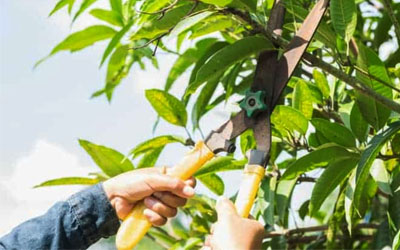
  • Prune the unnecessary branches every year as the stem is not thick as other varieties.
  • Regular watering has to be done during the first few weeks. Later the intervals can be increased.

Mulching is very important

The mulching process for newly planted plants involves covering the soil around the plants with a layer of organic or inorganic material to provide various benefits such as moisture retention, weed suppression, temperature regulation, and soil improvement.

Alphonso-mango-sapling-planting-instructions

Fertilisation for Alphonso Mango Plant

The mango plants do not require constant care or watering. The first fertilizing of the soil before planting the tree is the most important factor to check. Make a mixture with topsoil, cow manure, 2kg of bone meal and 2kg of phosphate and fill the hole and plant the tree in this mixture. After one year follow below NPK fertilization.

Remedies Common Diseases and Pests Attacks

Algal leaf spot

Alga causes this disease. The leaves get orange spots. Normally, the disease is harmless. To avoid this issue prune and use pesticides regularly. Use any fungicide to control the diseases. 

Anthracnose

Dark spots on leaves, flowers and fruit. As a result of this, fruits, leaves and flowers fall from the tree. This is a fungus attack. Normally, trees that are grown in wet regions face this issue. This is a serious disease. The use of fungicides at the right time can help to restrict the disease. 

Powdery mildew

The grey-white powder-like substance appears on fruits, flowers and leaves. Leaves, flower and fruit will fall from the tree before the fruit becomes ripen. Fungicides are very effective as the disease comes from a fungus. This can be seen everywhere where mango trees are growing. 

Fruit fly

Female flies lay their eggs on semi-ripen mangoes. When the fruit ripens, the eggs break and worms will appear and destroys the fruit. People can harvest before the full ripening of the fruit. Use neem-based pesticides to get effective results.

Mango mealybug

These bugs suck the juice of tender leaves, flowers and even fruits. They will appear on the leaves and fruits as a white powdery substance. This disease can be seen everywhere where trees are growing. Burn all the branches, leaves and fruits which have the infestation. Spray neem-based pesticides to avoid mealybug. 

Bacterial black spot

Visible cracks on stems of mango trees, as a result of a gummy substance, come from the tree. This a common disease that is seen everywhere. Remove the branches which have this disease and apply copper-based protective sprays to get effective results.

pruning fruit plants

Mango Plants Pruning and care

Tree pruning is a horticultural practice that involves selectively removing branches or parts of a tree for the benefit of the tree's health and appearance or to maintain safety.

Pruning should be done carefully and selectively to avoid causing damage to the tree or promoting undesirable growth patterns. It's important to use proper pruning techniques and tools to make clean cuts and minimize the risk of infection or decay.

However, dead, diseased, or hazardous branches should be pruned as soon as they are identified, regardless of the season.

Leave a Reply

Your email address will not be published. Required fields are marked *