 (+91) 9746 999 125
 support@greensofkerala.com
 Pan India Delivery

Achachairu: A Bolivian Fruit That Grows Well In Indian Climate


Buy Achachairu Plant Online
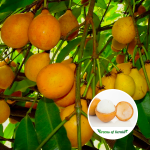
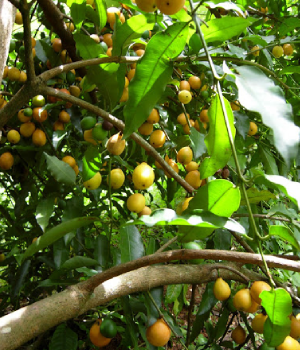

Achachairu, whose literal meaning is honey kiss, also known by the abbreviation Achacha is a fruit that made an entry into the global fruit market from the Amazon forests. The egg-shaped fruit with a thick, orange rind which has a sweet flavor and moderately tart, with notes of mango, purple mangosteen, berries, and a dash of pepper.
Achachairu or achacha is a fruit that is from the Amazon basins of Central Bolivia. Achachairu is a tree that fruits prolifically and is related to the mangosteen. Nowadays the fruit has been widely cultivated in Australia as well. Kerala, where abundant rainfall is getting, is also harvesting Achachairu. A small-stature tree, Achacha fruits prolifically produce hundreds of delicious pint-sized gems. Renowned for its rich antioxidant content and unique nutrient composition, folate, potassium and vitamin C.
The fruit has a somewhat shape of mangosteen and has a thick rind that can be removed using a knife or fingernails. It grows up to 4-6 centimeters in diameter when ripens and weighs approximately 35 grams. The fruit’s color and shape are so good that sometimes it is used for decorative purposes. It turns into reddish-orange color when matures having a pleasant smell.
The fruit’s taste is refreshing with sweet and citrus mixed. The fruit is a blueish-green color when it is young and the rind is bitter. Normally, the fruit has 1-4 seeds, depending on the size and climate of the soil. Keep the fruit at 15-20 degrees Celsius to get maximum days of shelf-life. A study reveals that the fruit will be okay for up to 4-6 weeks under this temperature and enough humidity. Achachairu can be eaten fresh, as such. It can also be consumed making it into juice. Fruit flies can be an issue, during this time use neem oil emulsion to keep away the flies.
The plant can be grown up to 7-15 meters high under caring climate and soil conditions. Once the plant is bruised or cut, it exudes latex. The tree does not support direct sunlight and this causes young foliage to wither away. When the leaves are young, they will be pinkish-red and once the leaves mature it turns yellowish-green. It will take 4-5 years to bear fruit after planting the seed.
|
Scientific name: |
Garcinia Humilis |
|
Flowering Age: |
2-3 years |
|
Best Propagation Method: |
Seed Sprouting |
|
Fruit Shape: |
Egg-shaped fruit with a thick, orange rind |
|
Flavor: |
Sweet and moderately tart, |
|
Origin: |
Amazon basins of Central Bolivia |
|
Climate: |
Tropical or Subtropical |
Achachairu are a rich source of essential nutrients like potassium and vitamin C, but they’re also one of the highest fruit sources of folate. Achachairu is also lighter in sugar than many other fruits while still having a subtle sweet taste. Here are some typical nutritional components found in approximately 100 grams of Achacha:
Fruits, though initially appear green in colour turns to yellow as they get ripened and finally to orange hue with a reddish tint by the time of harvest. Once harvested, Achachairu fruit does not undergo further ripening. It can be stored without refrigeration for several weeks, especially when kept within the recommended temperature range of 13-15ºC. To ensure optimal freshness, it is advisable to avoid prolonged refrigeration and instead store the fruit in the coolest area of your home.
Achachairu requires a tropical or subtropical climate. Hard winter makes the flowers and fruit to drop, and it also requires modest rainfall. The fruit unlike many other fruits can withstand flooding and water-logging for a certain duration. It prefers natural soil, fertile with compost or cow manure and it favors a neutral pH value of the soil.
Normally, the Achachairu plant uses its seeds from the fruits to propagate, because budding and grafting methods are not successful. Latex inside the trunk makes it difficult for the Achachairu to be successful in the grafting method to propagate. Pollination is done by natural means such as bees and other insects.
The plant grows well in almost all soil conditions. But the fruit-bearing capacity of the fruit reduces when the climate goes below 20 degrees Celsius. The plant requires a temperature between 25-35 degrees Celsius. The root system of the variety is very weak, so that makes a hole that is at least 2 meters in length, width and height for planting the sapling.
⚠️ Orders are temporarily paused due to nursery maintenance. We’ll reopen soon!
No account yet?
Create an Account